Think by the Bay
California State University, East Bay
25800 Carlos Bee Blvd.Hayward, CA 94542
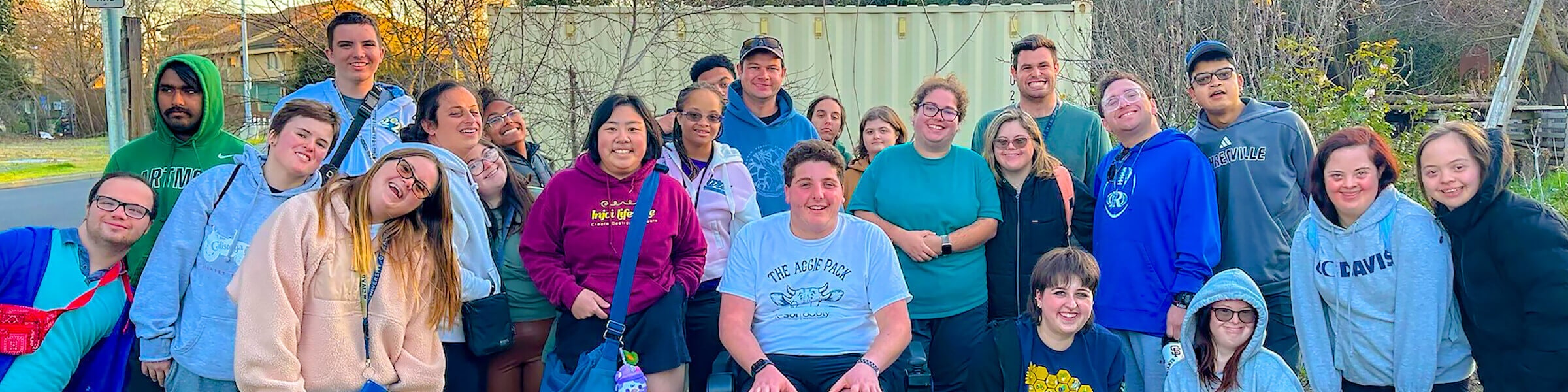
Think by the Bay (TBTB) is a four-year program that welcomes, supports, and includes students with intellectual disability at Cal State East Bay. Students enroll in academic courses aligned with their areas of interests, participate in targeted employment preparation and experiences, and enjoy the social experiences that are unique to campus life!
CONTACT INFO
| Program Contacts: |
|
|---|---|
| Program Contact Email: | thinkbythebay@csueastbay.edu |
| Program Phone: | |
| Program Website: | www.csueastbay.edu/cdjr/think-by-the-bay.html |
GENERAL
| Public or Private: | Public |
|---|---|
| Type of School: | 4 Year College or University |
| Size of School: | Medium (5,000-15,000) |
| Length of Program: | 4 Year |
| Accepts out-of-state students? | Yes |
| Type of Postsecondary Education Program: | Integrated/Immersive Inclusion → full participation in all aspects of campus with coordinated supports |
| Residential Living Component: | Yes |
| Walkability & Bikeability of College and Surrounding Community: | Walk Score |
| Public Transportation Available: |
|
| Number of Students in Program: | 8 |
| Number of Students Per Cohort: | 8 - 10 |
| When do new cohorts begin? | Fall |
| Types of disabilities who are/may be represented in this program, but are not limited to: | Intellectual |
REQUIREMENTS
| Age Requirements: | 18 - 28 |
|---|---|
| Is a high school diploma required? | No |
| Deadline for Application: | |
| Criteria for Admission: | Criteria |
| Supports that are provided: |
|
| Program serves only students who have exited the K-12 system? | Applicant is not required to attend a 2 year transition program provided by their district |
ACCEPTANCE, RETENTION, AND COMPLETION RATES
| Acceptance rate for the most recent fall term: | 40% |
|---|---|
| Retention rate for first year students from the previous academic year to the current one: | 100% |
| Admitted applicants with these skills are commonly seen, but are not prerequisites. Students will have the opportunity to develop them directly during the program. | |
| Minimum requirements for the program | View Requirements |
COST
| Average Total Program Cost (Tuition, Student Fees, Housing, Room and Board, Books/Materials, Program Fees): |
|
|---|---|
| Is this a federally funded TPSID Program? | Yes |
| Out of pocket expenses for the program can be funded in the following ways: |
|
| Average Out-of-Pocket Fees: | $2,500 per semester |
ACADEMICS
| Approximate percentage of all courses taken by students in the program that are inclusive: | 100% |
|---|---|
| Do all students in this program enroll in at least one inclusive college/university course for credit or audit each quarter/semester? | Yes |
| University courses are for: |
|
| Course Access: |
|
| Credential(s) or certificate(s) students earn upon completing the program: | Certificate of Program Completion |
| Is this credential/certificate approved by the college/university? | No |
| Students in the program have access to the following campus-wide services: |
|
EMPLOYMENT
| Percentage of students in this program have paid work while attending the program: | ~75% |
|---|---|
| Other career development activities include: |
|
| Percentage of students in this program that had paid work after exiting the program: | |
| Resources offered to students: |
|
| Program Partnerships: |
|
| External Supports Partnerships: |
|
HOUSING / MEALS
| Are residential living skills a component of this program? | Yes |
|---|---|
| Housing Options: | On-campus dorms |
| Are life skills a component of this program? | Yes |
| Housing is provided and arranged for students? | Yes |
| Are students able to live and work over the summer in the housing? | No |
| Are campus meal plans available? | Yes |
| Are on campus food options available? | Yes |
| Is there a food pantry on campus? | Yes |
EXTRACURRICULAR / CAMPUS LIFE
| Students can participate in student organizations and/or clubs on campus: | Yes |
|---|---|
| Students may participate in the following extracurricular activities: |
|
| Supports available to students in evenings and weekends: |
|